FiberStrike LCM-350 Series Displacement / Crack Sensors
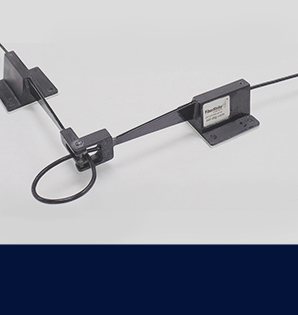
Patent-pending FBG displacement sensors that measure small relative movements between a fixed and a moving reference frame, in one or two axes. Marketed on the FiberStrike site as the FBG Crack Sensor.
Technical overview
LCM-350 sensors are optically based and use fiber Bragg gratings, so they are passive, emit no signals and need no power at the sensing point. Mounting orientation and configuration select the measured axis or axes, and the design differentiates movement in multiple axes rather than confusing directions. The bodies are corrosion-resistant composites that mount with hardware or epoxy on new or retrofitted structures. Hundreds may be distributed over a wide area and networked over non-conductive fiber to a FiberStrike front end up to 20+ km away.
Features
- Passive and emit no signals
- Require no electrical power
- Immune to interference
- Rugged, made of corrosion-resistant composites
- Easily installed on new structures or retrofitted to existing structures; mounted using hardware or epoxy
- All LCM-350 sensors are temperature compensated
- Standard and custom configurations available
Specifications
| Parameter | Value |
|---|---|
| Displacement range | +/-0.25 inch any axis, all axes in |
| Position accuracy | Better than 0.001 in |
| Resolution | Better than 0.001 in |
| Available configurations | LCM-350-1X/1Y (1 axis X or Y), LCM-350-1Z (1 axis Z), LCM-350-2XY (2 axis X-Y), LCM-350-2XZ/2YZ (2 axis X-Z or Y-Z) |
| Maximum distance to FiberStrike front-end system | 20+ km |
| Fiber pigtail length (standard) | 1 m |
| Temperature compensation | All LCM-350 sensors are temperature compensated |
Applications
- Monitoring expansion joints on bridges
- Measuring cracks in concrete structures
- Monitoring alignment of machine components
You may also like
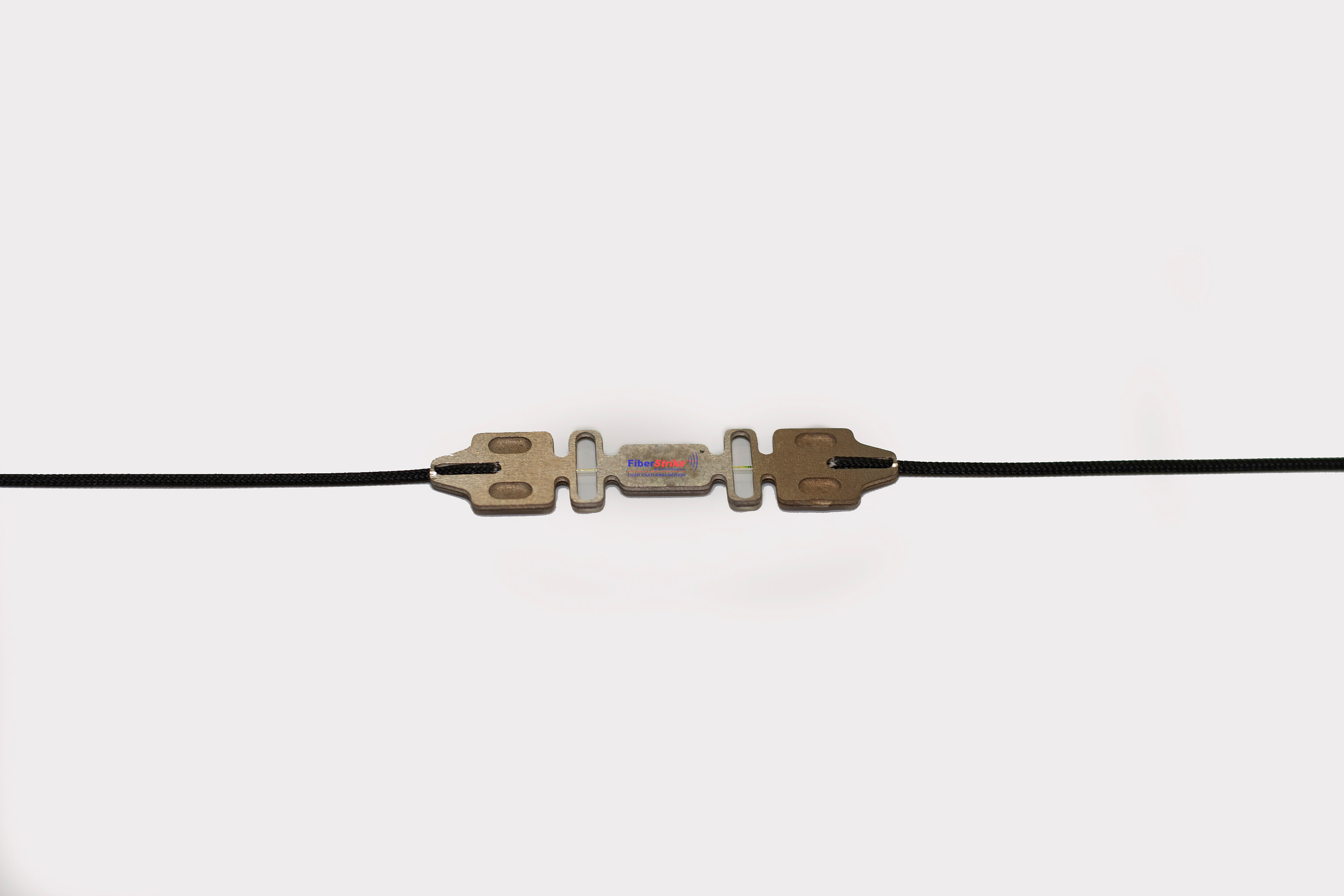
CEL's core range of Fiber Bragg Grating point sensors for temperature, strain and pressure, supplied in many configurations for bonding to existing structures or embedding in new construction.
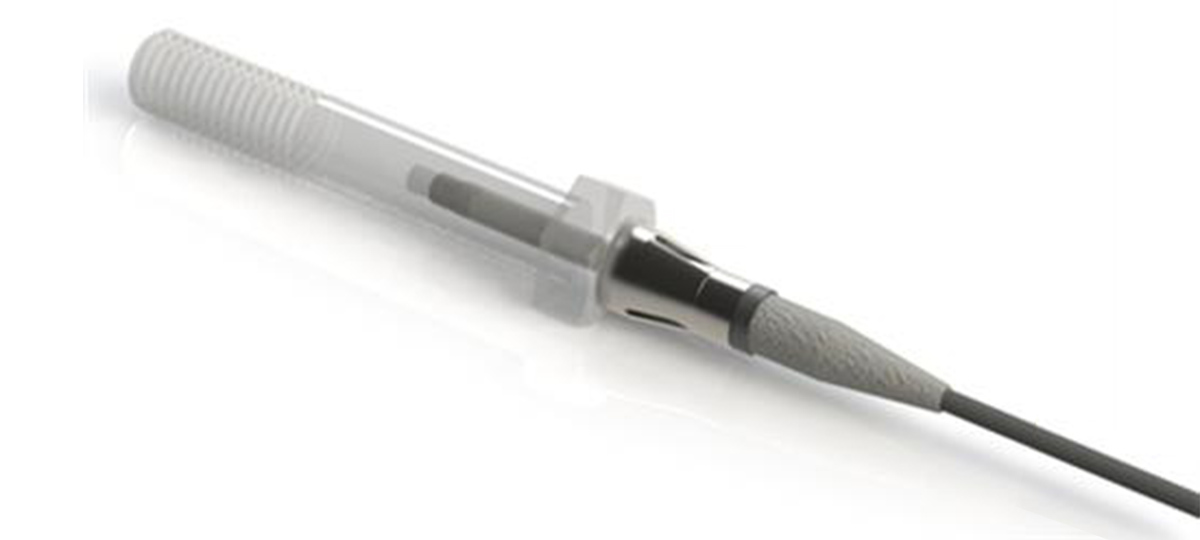
A patented FBG insert that turns an ordinary structural fastener into a smart fastener, continuously measuring bolt elongation and tension. The insert is fitted into a bored and threaded fastener.
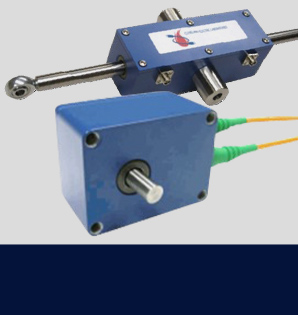
FBG-based linear and rotary displacement sensors with configurable mounting and end fittings, available in aluminium or stainless steel bodies for harsh and submersible service.
Need help specifying this?
Our application engineers will confirm specifications with the manufacturer and quote for your configuration.
Request Info